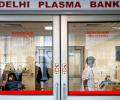
Plasma is separated from the blood of donors using a plasmapheresis machine. ILBS has 10 of these machines at present, and two more are expected to arrive soon, the senior doctor at ILBS said.
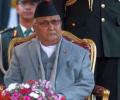
'The Prime Minister's remarks that India was conspiring to remove him was neither politically correct, nor diplomatically appropriate,'

Nepal said it was confident that both its "friendly neighbours" India and China will resolve their border stand-off at the Line of Actual Control through peaceful means.
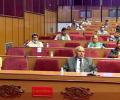
Nepal last month released the revised political and administrative map of the country laying claim over the strategically key areas, more than six months after India published a new map in November 2019.
'The redrawing of the map with the inclusion of Kalapani area by Nepal and endorsement from the House of Representatives shows the KP Oli government's move to gain cheap popularity in the name of nationalism'

India last month reacted angrily to Nepal showing the three areas as Nepalese territory in the new map and cautioned the country that saying such "artificial enlargement" of territorial claims will not be acceptable to it. India has been maintaining that these three areas belong to it.
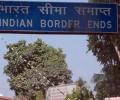
A house meeting has been scheduled for Saturday as per the Parliament's notice and the matter relating to the constitution amendment bill is likely to come during the meeting, parliamentary sources said. Meanwhile, in a conciliatory tone, India on Thursday said it deeply values its friendly ties with Nepal.
He claimed that India built a Kali temple, created 'an artificial Kali river' and 'encroached the Nepalese territory through deploying the Army' at Kalapani. The river defines the border between the two countries.
The ties between India and Nepal came under strain after defence minister Rajnath Singh inaugurated a 80-km-long strategically crucial road connecting the Lipulekh pass with Dharchula in Uttarakhand on May 8.
Nepal recently released the revised political and administrative map of the country laying claim over the strategically key areas of Lipulekh, Kalapani and Limpiyadhura.
The government had registered the amendment proposal in Parliament on May 22 after releasing the new political map of Nepal depicting Kalapani, Lipulekh and Limipiyadhura as its territories on May 18.

'All governments disappointed us. Now we don't have faith in any of them'
Speaking about the COVID-19 pandemic in Parliament on Tuesday, Oli said it has become very difficult for Nepal to contain the spread of the deadly virus due to the flow of people from outside.
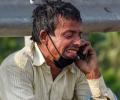
Rampukar's wife Bimal Devi had walked about 3-4 km towards the hospital on Monday when their young distant nephew, on his way to buy ration on a bicycle, saw her and instead of going to a shop offered her a ride to the hospital, Rampukar said.

Oli said the territories belong to Nepal 'but India has made it a disputed area by keeping its Army there'. "Nepalis were blocked from going there after India stationed its Army," he said.
Both India and Nepal claim Kalapani as an integral part of their territory -- India as part of Uttarakhand's Pithoragarh district and Nepal as part of Dharchula district.
Rampukar Pandit, whose mournful face became emblematic of the tragedy faced by poor migrants currently, is currently in hospital, but all he wishes is to return home.
The powerful image of the distraught man, struggling to reach home in Begusarai, almost 1,200 km away during the nationwide lockdown, was widely shared across all media, becoming a defining image of the trauma of lakhs of migrant labourers stranded away from home.
The Lipulekh pass is a far western point near Kalapani, a disputed border area between Nepal and India.
Many medical experts feel that the nation would have fared far worse without the lockdown.
 © 2026 Rediff.com - Investor Information - Advertise with us - Disclaimer - Privacy Policy - Sitemap - Feedback - About us - Terms of use - Grievances